Legacy
Our heritage brings a rich history in visual and musical arts. Our descendants are from families which worked on facade elements in the French neo-baroque and neo-renaissance style on the House of Jevrem Grujić in Belgrade (1896), originally created by the Italian master of decorative painting Domenico D’Andrea by using a very rare sgraffito technique, almost a unique example of architecture in Belgrade (Serbia).
One of our founders, Vladimir von Bergdorff, Managing Director of Foster + Svensson, is a member of the Suvodolac family from Belgrade, Serbia, with a modern origin back in the 1860s. His grandfather, Dragiša Suvodolac, a Royal Court artist, worked with sculptor Ivan Meštrović on creating the “The Victor“ monument in Belgrade (1928) and the “Memorial monument to the Unknown Hero“ atop Mount Avala in Belgrade (1938), to name a few. The family of Suvodolac was awarded in 1938 by King Peter II Karađorđević of Yugoslavia with the Royal Household Silver Medal with Crown Rare for visual art services including painting, sculpture, and architecture. Vladimir’s grandmother and her ancestors trace their lineage back to the Austro-Hungarian Empire and the Regency of the Kingdom of Hungary, encompassing direct family lines.
Suvodolac is one of the oldest and rarest families in Serbia, dated back to the 11th century between 1004-1008 during the Byzantine Empire, when Suvodol monastery was built and later rebuilt by Prince Lazar of Serbia as the Nemanjić dynasty foundation in the 14th century. Complete reconstruction was done in 1866 by Mihailo Obrenović, Prince of Serbia. Suvodol monastery is marked as a cultural monument of great importance under the Institute for the Protection of Cultural Monuments of Serbia.
Dragiša Suvodolac, one of the few scholarship holders of His Majesty King Petar II Karađorđević of Yugoslavia, was personally recognized by the king for his talent and potential. King Petar II Karađorđević had long been searching for artists to work at the court in the fields of architecture, sculpture, painting, and art in general. With the patronage and scholarship of His Majesty and the Court, Dragiša secured further education and work. After completing his studies, he collaborated with sculptor and artist Ivan Meštrović on monumental works in Serbia, including “The Victor” monument on Kalemegdan in Belgrade (1928) and the “Monument to the Unknown Hero” atop Mount Avala (1938). Despite having a monochromatic vision and being colorblind, Dragiša Suvodolac created numerous other works of art, such as sculptures, busts, architectural drawings, and paintings, which are now owned by the Suvodolac and von Bergdorff families.
Photo: Declaration and Silver Medal of Honor with Crown Rare, given by His Majesty King Peter II Karađorđević of Yugoslavia on August 16, 1938 in Belgrade.
For his exceptional work and contributions to the court, at the suggestion of the Marshal of the Court, His Majesty King Peter II Karađorđević of Yugoslavia honored Dragiša Suvodolac with the rank of Corporal of the Avala Detachment and the Silver Medal with Crown Rare on August 16, 1938, in Belgrade. This recognition is documented in the Military Geographical Institute Belgrade, as evidenced by the number № 821. The Silver Medal, featuring the image of HM King of Yugoslavia Aleksandar Karađorđević, was crafted in Vienna by Mayer’s Söhne k.u.k. Hof u. Kammer-Juweliere Ordenfabrikanten Wien, a renowned jewelry shop.
Vladimir’s grandfather, a scholar of the king and an artist at the court of King Peter I Karadordević, inherited a rich historical and noble legacy. King Peter I, a pivotal figure in Serbian history and a fervent admirer of art and culture, was a patron of the arts. Vladimir’s grandfather, an artist at the court, belonged to the high social class, was connected to court circles, and significantly influenced Serbia’s cultural development during that era. Personally selected artists close to King Peter I were highly respected and financially supported through royal scholarships, which undoubtedly shaped the artistic tradition of the Suvodolac family. This illustrious origin imbues Vladimir’s name with profound significance in the annals of art, culture, and aristocracy.
Privilege from the Emperor and the King
Vincenz Mayer’s Söhne, established in 1810, was a renowned jewelry company in Vienna. Initially, it served as a purveyor to the Imperial and Royal Court. Throughout the 19th and 20th centuries, it emerged as one of the most significant jewelers of religious orders in Vienna. The company’s address was Stock-im-Eisen-Platz 7 in the 1st district, Innere Stadt (Inner City).
After Vincenz Mayer’s passing in 1865, his three sons—Joseph, Vincenz, and Franz Mayer—successfully inherited and continued the business. Their efforts led them to become one of the first and most esteemed jewelers in the Austro-Hungarian Empire. Beyond jewelry and silverware, they also crafted orders and decorations, including the Order of the Iron Crown for the state. Their exceptional skills in precious metal craftsmanship were widely recognized.
Vincenz Mayer’s Söhne stood out as one of the few Austrian companies operating in this sector, alongside C. F. Rothe & Neffe. The company’s commitment to quality and exceptional service earned them the prestigious titles of Imperial and Royal Court Jewelers and later, Chamber Jewelers to the Emperor and Empress.
Around 1900, Vincenz Mayer’s Söhne, a company of appraisers of precious objects for the Imperial Court Marshal’s Office and suppliers to the Chancellery of the Imperial Austrian Order of Franz Joseph, manufactured all classes of this order, primarily in gold. Their customers included foreign sovereigns and the most distinguished Viennese social circles. The company also supplied the courts of Serbia, Montenegro, Yugoslavia, Bulgaria, the Vatican, Persia, the Ottoman Empire, and many others. The shop on Stock-im-Eisen-Platz featured a permanent exhibition of art objects and household goods. However, the outbreak of the First World War and the collapse of the monarchy brought difficult times for the company. Due to the economic crisis in the postwar years, the company had to close in 1922.
Photo: Wiener Zeitung 1903, Vienna, Austria, Mayer’s Söhne k.u.k.Hof u. Kammer-Juweliere Ordenfabrikanten Wien, jewelry shop.
In the Austro-Hungarian Dual Monarchy, an Imperial and Royal Court Supplier (k.u.k. Hoflieferant) was a merchant or service provider (from 1911, also a company) granted imperial privilege to supply goods and services to the court in Vienna. These companies could be either state-owned (owned by the court) or privately owned. Before the Austro-Hungarian Compromise of 1867, which established the Dual Monarchy, companies were known as k.k. Hoflieferant (Imperial and Royal Purveyor to the Court) or simply Imperial Purveyor to the Court. This title was awarded only to companies that were leaders in quality within their sector. Therefore, the title k.u.k. Hoflieferant signified the highest class, the pinnacle of business achievement at the time. During Austria-Hungary’s golden age, over 500 purveyors to the court operated in Vienna alone, with others in Bad Ischl, Budapest, Karlovy Vary, Prague, and beyond. The total number of all companies is estimated at 2,500. Even today, several companies and businesses proudly retain this title and openly use it. In Vienna, Austria, there are still about two dozen. Purveyors to the Imperial and Royal Court continue to enjoy a stellar reputation and an aura of exclusivity and superior quality, reflecting the products that once graced the Imperial Court. These products remain among the most expensive and exclusive in the country, highly valued by customers and enthusiasts alike.
To be awarded and decorated by His Majesty with a medal made in jewelry shops like these indicates excellence in work that stands out even above their own.
Heirs and the modern era
The Suvodolac family, in which Vladimir traces his roots, has deep historical and artistic traditions. His grandfather, a royal artist, closely worked with Ivan Meštrović, indicating a strong connection with cultural heritage. The family is also historically connected with the Suvodol monastery, which additionally highlights the deep cultural heritage that shaped Vladimir’s worldview and business.
Vladimir’s father’s family owned vineyards in Serbia, outside of Belgrade, until World War II. Unlike his mother’s family, Vladimir’s ancestors hailed from the Austro-Hungarian Empire, specifically the Regency of the Kingdom of Hungary. During the Middle Ages, families with the prefix “von” were often associated with land or estates and typically enjoyed certain privileges associated with noble status, such as the title “Count” (Graf / Gróf).
Vladimir von Bergdorff’s aristocratic heritage and the name he bears, “von Bergdorff,” hold significant historical importance. Such rare surnames often have deep roots and signify connections to noble and aristocratic families. The Von Bergdorff family stands out due to its unique intermarriage with various royal orders across the Europe, Austro-Hungarian Empire, the Regency of the Kingdom of Hungary, the Kingdom of Yugoslavia (Kingdom of Serbs, Croats, and Slovenes), Austria, Liechtenstein, and Switzerland. Consequently, and represents a distinctive family lineage with a relatively rare number of descendants.
The “von Bergdorff” surname, rooted in European noble tradition, signifies aristocratic lineage. Moreover, his family’s historical ties to Suvodolac underscore a profound connection to cultural heritage. This aristocratic background explains Vladimir’s privileged access and opportunities in the business world, as well as his remarkable ability to identify and capitalize on global business prospects.
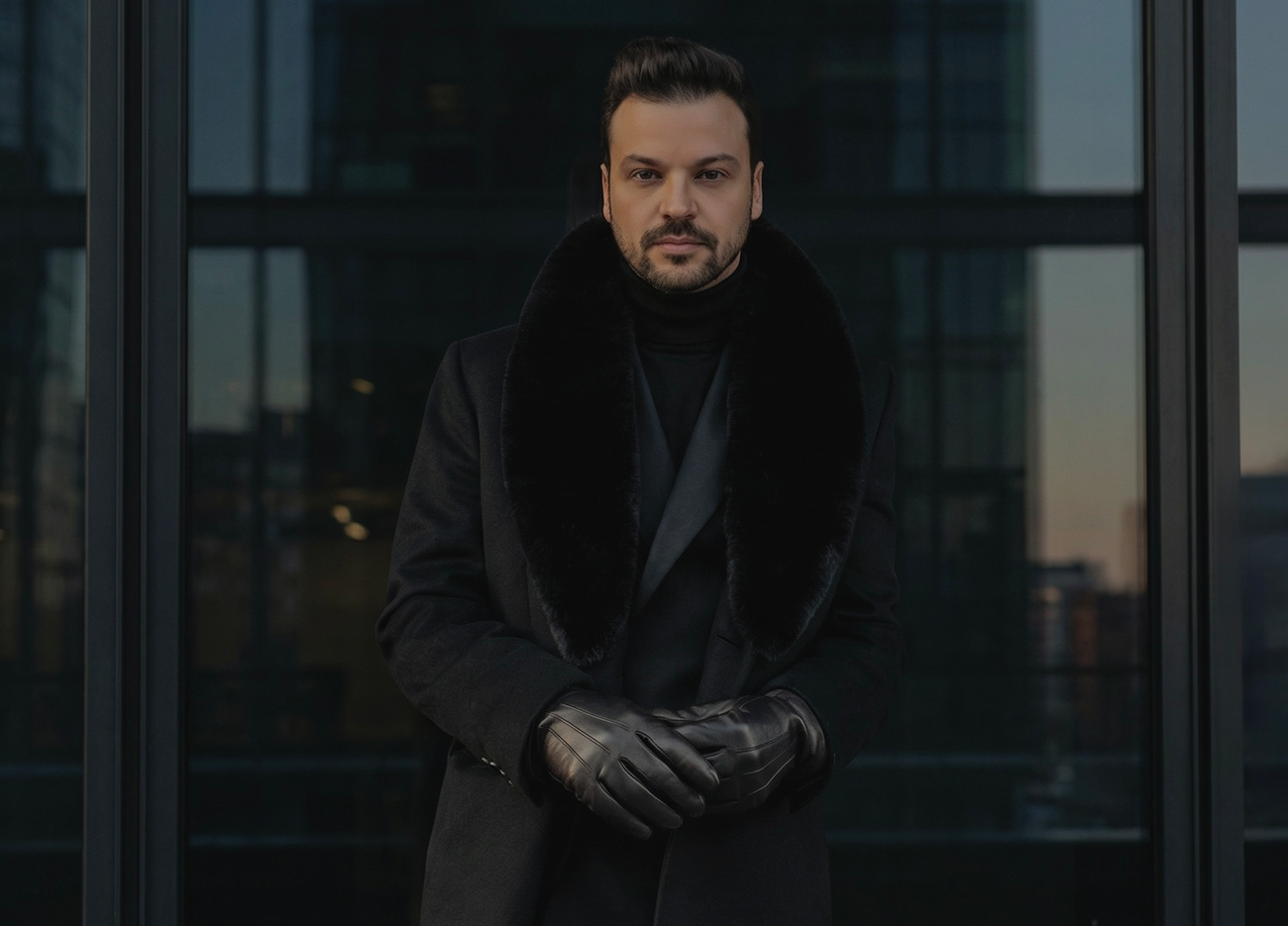
Photo: Mag. Vladimir von Bergdorff, MA, Group Managing Director.
Vladimir von Bergdorff, a direct descendant of Dragiša Suvodolac, his grandfather, has been passionate about art, drawing, and design since the age of five. He attended private drawing and sculpture schools and the National Museum School, where he competed in the field of art history for 8 years. During his next 4-year secondary education, he pursued two different fields: fine arts, art history, design geometry, perspective, designing, photography, sociology, psychology, and marketing, merchandising, retail, trade, economics, political economy, mathematics, and physics. This enabled and formally educated Vladimir to disseminate his knowledge in a balanced manner, encompassing social, natural, art, and formal sciences. Vladimir enrolled in the Faculty of Physics and simultaneously attended private art school lessons for 3 years to prepare for, and enroll at the Faculty of Applied Arts and Design at the University of Arts in Belgrade, from which he earned a Magister and Dipl. Arh. titule, and a Master’s degree in art and design (MA) in his 5 years of formal academic studies.
Vladimir von Bergdorff hails from a distinguished and varied aristocratic lineage. Beyond his royal connections, he was raised in an environment that afforded him numerous privileges, including access to exceptional education, a rich cultural heritage, and valuable business contacts. Such families are typically well-connected in politics, the arts, economics, diplomacy, and Vladimir’s background undoubtedly plays a significant role in his business success.
Vladimir is closely associated with the Suvodolac family, which has a rich history spanning Europe and Serbia. This noble family has held certain privileges and social status throughout history. Historical sources suggest that the Suvodolac family has contributed to various fields, including art, theology, and culture, reflecting their esteemed position within social circles.
Suvodol Monastery holds significant historical and cultural importance, reflecting the deep-rooted connection of the Suvodolac family to the spiritual heritage of their lineage. The Suvodolac family’s association with the monastery of Suvodol is particularly noteworthy, as monasteries throughout history served as centers of power, safeguarding historical data and diplomatic connections. These monasteries often aligned with noble or aristocratic families, and Suvodol Monastery was no exception. It was closely linked to the Nemanjić and Obrenović dynasties, pivotal figures in Serbian history. These dynasties, renowned for their architectural prowess, rebuilt and constructed monasteries across various periods. Suvodol emerged as a significant hub of spiritual and cultural influence, underscoring the profound impact of the Suvodolac family on Serbian history. Through generations, the Suvodolac family transcended artistic endeavors to become a noble and historically significant family, deeply intertwined with the spiritual fabric of their heritage.
The Suvodolac family’s connections to the Nemanjić and Obrenović dynasties signify political and diplomatic ties allowed them to maintain privileges in Serbia and beyond, even during the Austro-Hungarian Empire. The family’s historical background, encompassing the Austro-Hungarian Empire, the Regency of the Kingdom of Hungary, and the Kingdom of Serbs, Croats, and Slovenians, significantly influenced political, social, and cultural transformations. Beyond their historical ties with the royal family and noble circles in Serbia, the family was also connected to pivotal power centers within the Austro-Hungarian Empire and the Regency of the Kingdom of Hungary, a prominent political entity in Europe at the time. These profound connections explain Vladimir’s ease in establishing international markets and building a global network through their business endeavors.
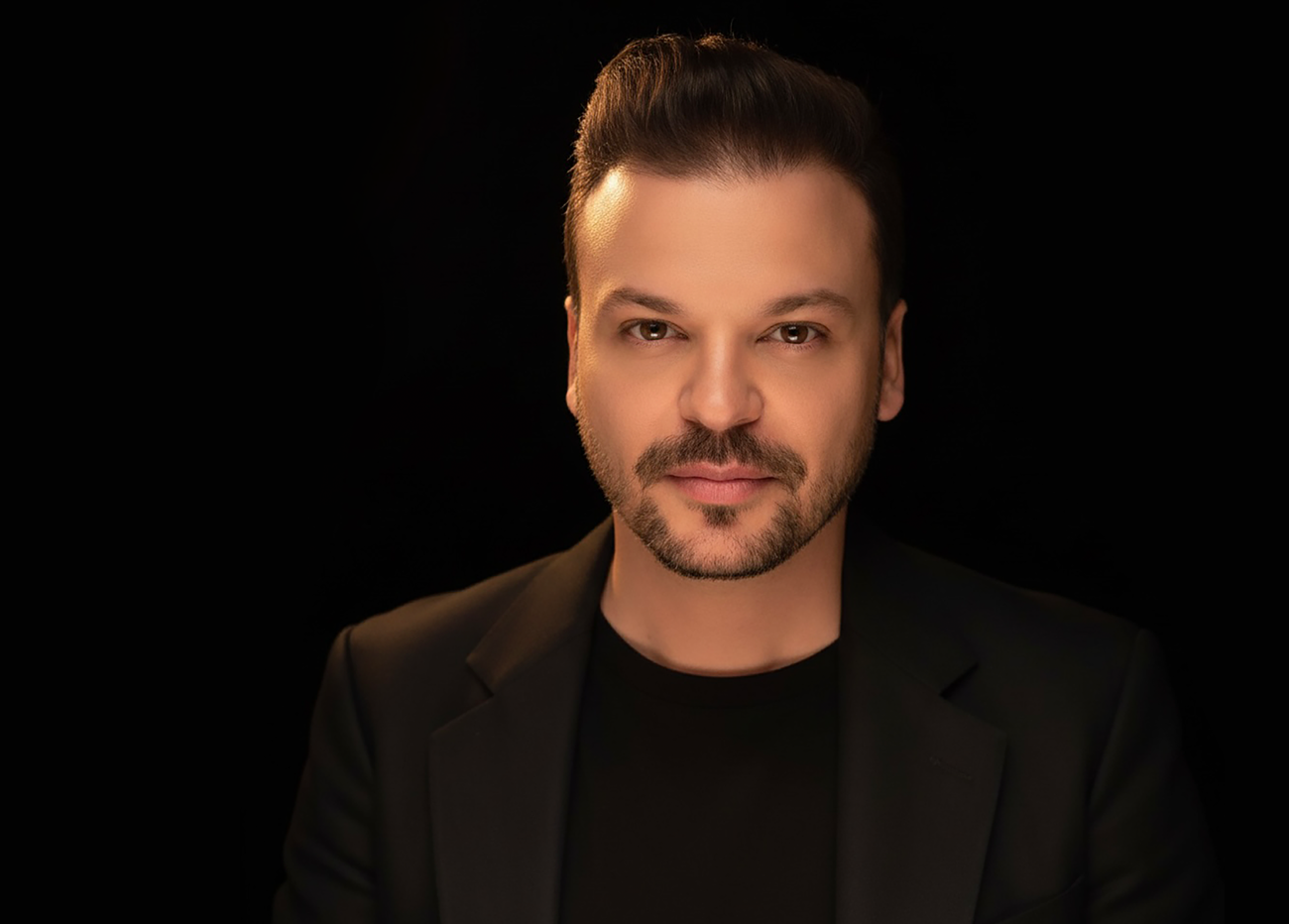
Photo: Mag. Vladimir von Bergdorff, MA, Group Managing Director.
Vladimir von Bergdorff’s aristocratic and noble lineage explains his remarkable ability to establish extensive business networks and manage global brands. The family’s deep-rooted involvement in the art world, particularly through Dragiša Suvodolac and his collaborations with renowned artists like Ivan Meštrović, underscores Vladimir’s profound artistic influence. This cultural heritage profoundly shaped his business approach, particularly in marketing and branding, where aesthetics and visual communication hold paramount importance.
Considering his extensive historical connections, Vladimir von Bergdorff inherited a rich aristocratic heritage that provided him with a solid foundation in business and strategic thinking. This enabled him to rise through the ranks of global companies. Through this aristocratic cultural heritage, he developed international business networks, leveraging the family’s connections with major European and global markets. Vladimir’s position as a global leader in marketing and branding, coupled with his noble and artistic heritage, gives him a unique influence in the business world. This explains why he has been able to create such significant global success for numerous brands, companies, and corporations.
Vladimir von Bergdorff, with his aristocratic lineage, connections to King Peter I’s court, the Suvodol monastery, and ties to the Nemanjić and Obrenović dynasties, possesses a rich historical and cultural heritage that significantly influenced his business and cultural approach. Throughout the centuries, his connections with noble and court circles were undoubtedly pivotal in establishing his global business influence while simultaneously preserving a profound connection to historical and artistic heritage.
Vladimir’s ancestors trace their lineage back to direct family bloodlines from the Austro-Hungarian Empire, the Regency of the Kingdom of Hungary, and the Kingdom of Serbs, Croats, and Slovenians.